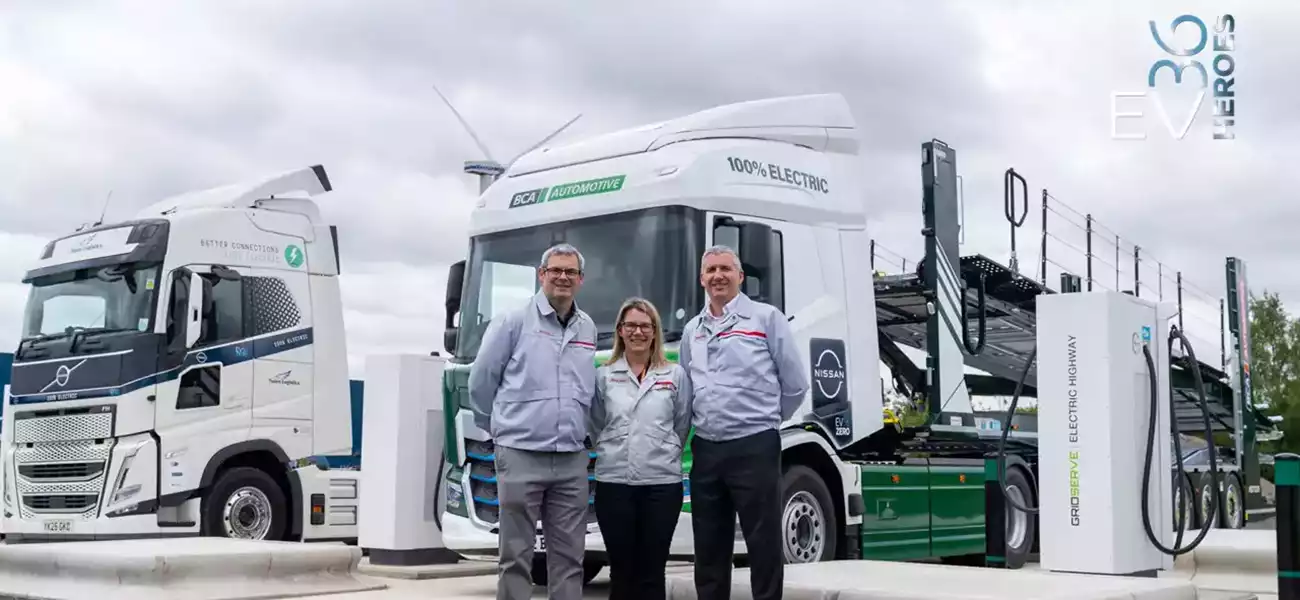
Powering the Future: Nissan Switches on Electric Truck Charging Station
Nissan has flicked the switch on a new era of sustainable freight logistics. At the heart of the transformation is a £1.4 million high-power charging station for electric heavy goods vehicles (eHGVs) – the first of its kind in the UK.
Strategically located at Nissan’s Sunderland Plant, the brand-new eHGV hub isn’t just a set of chargers – it’s the engine developing an electric, end-to-end supply chain and a major milestone in Nissan’s EV36Zero vision to transform the plant into a flagship EV hub.
Electrification Meets Innovation
The bold initiative brings together Nissan, Fergusons, Yusen, and BCA in a collaborative effort driven by GRIDSERVE and funded by the UK Government through Innovate UK’s Electric Freightway programme.
The new depot features seven charging stations with the capacity to charge 10 eHGVs at once – delivering up to 360kW per vehicle. The result? A fleet of 25 all-electric trucks capable of clocking over 2.4 million kilometres per year while slashing carbon emissions by 1,500 tonnes.
In the above video Andy Rogers, Inbound Logistics Manager, Sunderland Plant, and one of the EV36Heroes responsible for making this bold vision a reality, celebrates how the station “puts us at the forefront of the UK logistics freight industry… it’s really exciting for Nissan to be leading the way”.
Delivering More Than Just Cars
The 25-strong eHGV fleet will run daily routes for inbound parts from as far away as Derby as well delivering finished cars to the Port of Tyne. With more than 60 electric deliveries in and out of the plant each day, the station is just the beginning.
“We’re exploring ways to open this infrastructure to more hauliers,” says Michael Simpson, Vice President of Supply Chain Management, Nissan AMIEO. “This station is a springboard for broader, cleaner logistics – and we’re just getting started.”
The Road Ahead
This Sunderland launch marks a bold stride toward a zero-emission future – not just for Nissan, but for the UK’s entire freight landscape. It’s a signal that electrification isn’t coming – it’s already here, and it’s changing the way we do things.